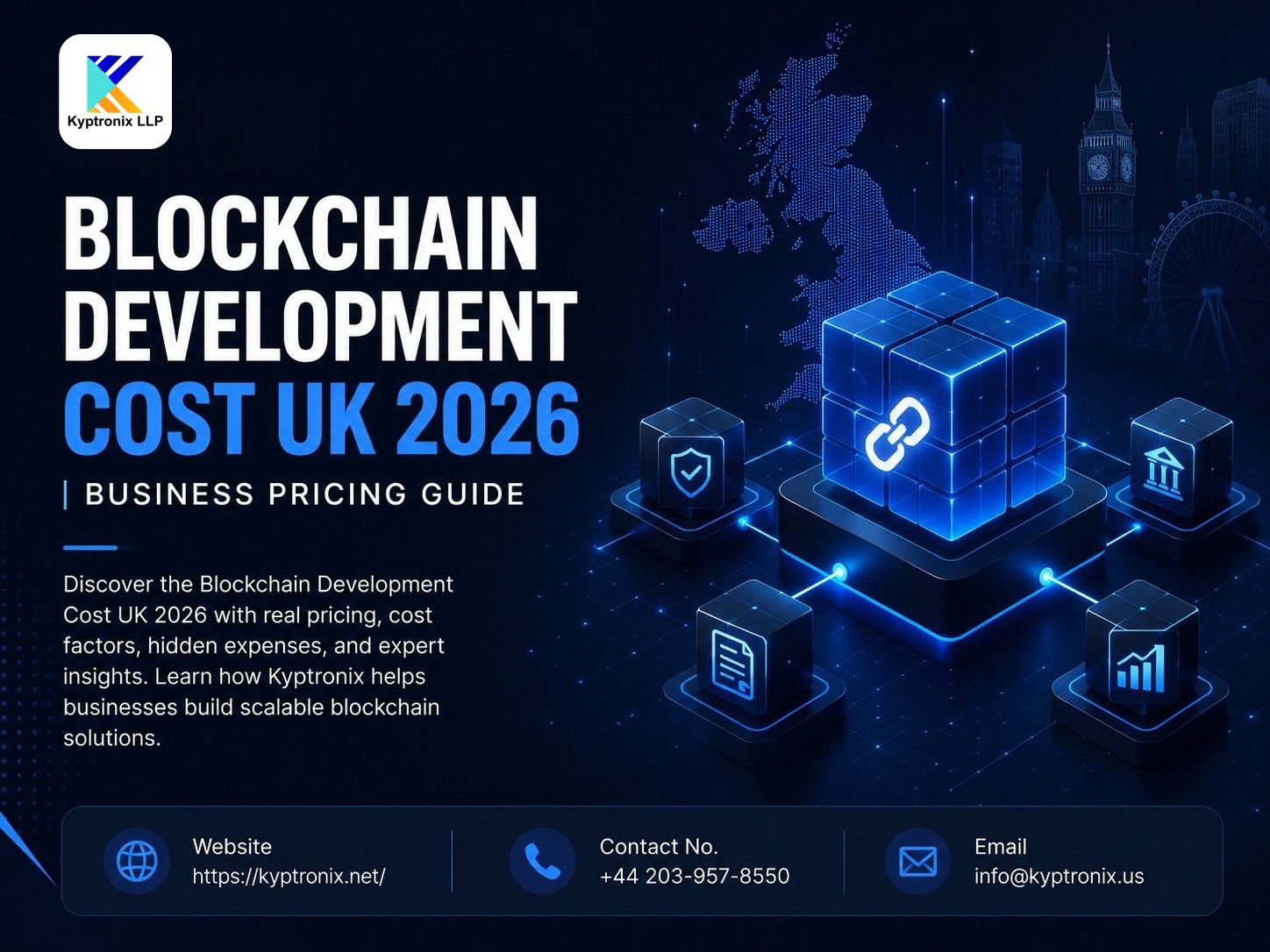
Blockchain Development Cost UK 2026: What Businesses Should Expect to Pay
Imagine two companies planning almost identical blockchain projects. The first launches a secure blockchain application for around £45,000. The second invests well over £350,000.
At first glance, it seems like one company massively overspent. In reality, both made the right investment.
The first business needed a simple blockchain MVP to validate an idea. The second required a fully integrated enterprise platform with advanced security, smart contracts, compliance features, third-party integrations, and infrastructure capable of supporting thousands of users.
This perfectly illustrates why there isn't a single answer to the question: "What is the Blockchain Development Cost UK 2026?"
The truth is that blockchain development isn't a product you purchase off the shelf. It's a business investment shaped by your objectives, industry, technical requirements, and future growth plans.
Many businesses begin with a rough budget only to discover hidden expenses during development. Others overspend on features they don't actually need.
The smartest companies take a different approach. They understand where every pound is being invested before development begins.
At Kyptronix, we've worked with businesses looking to modernise operations through Custom Blockchain Development, automate processes with Smart Contract Development, and build secure Enterprise Blockchain Solutions. One thing we've learned is simple:
"The cheapest blockchain project rarely delivers the best value. The right blockchain project does."
In this guide, we'll break down the Blockchain Development Cost UK 2026, explain what influences pricing, highlight hidden costs many businesses overlook, and show you how to maximise your return on investment.
Why Blockchain Is No Longer Just for Crypto Companies
A few years ago, blockchain was almost entirely associated with Bitcoin and cryptocurrencies. That has changed dramatically.
Today, businesses across almost every industry are exploring blockchain as a way to improve efficiency, strengthen security, and reduce manual processes:
- ✓Financial institutions are automating settlements through smart contracts.
- ✓Healthcare providers are protecting patient records.
- ✓Retailers are improving supply chain transparency.
- ✓Manufacturers are tracking products from production to delivery.
- ✓Real estate companies are streamlining property transactions.
- ✓Government organisations are exploring secure digital identity solutions.
In other words, blockchain has evolved into a practical business technology rather than a niche innovation.
Industry analysts continue to project strong enterprise investment in blockchain technologies, driven by increasing demand for automation, transparency, and secure digital infrastructure. For businesses planning long-term digital transformation, blockchain is becoming a strategic investment rather than an experimental one.
This growing adoption also explains why demand for experienced Blockchain Development Services in the UK continues to rise.
What Does Blockchain Development Actually Include?
One of the biggest misconceptions is that businesses are paying developers simply to "build a blockchain." In reality, development represents only one part of the overall project.
A successful blockchain solution typically includes:
- Business discovery workshops
- Technical architecture planning
- User experience and interface design
- Blockchain network selection
- Smart contract development
- Frontend and backend development
- API integrations
- Security implementation
- Quality assurance testing
- Smart contract audits
- Deployment
- Infrastructure setup
- Ongoing maintenance
Each phase contributes to the overall Blockchain Development Cost UK 2026.
Skipping any of these stages may reduce the initial quote, but it often leads to higher costs later through redevelopment, security issues, or performance problems.
How Much Does Blockchain Development Cost in the UK?
While every project is unique, businesses can use the following investment ranges as a realistic starting point when budgeting.
| Project Type | Typical UK Investment |
|---|---|
| Proof of Concept (PoC) | £8,000–£20,000 |
| Smart Contract Development | £8,000–£25,000 |
| Token Development | £8,000–£20,000 |
| Cryptocurrency Wallet | £20,000–£50,000 |
| Blockchain MVP | £40,000–£120,000 |
| NFT Marketplace | £50,000–£150,000 |
| Private Blockchain Platform | £75,000–£200,000 |
| Enterprise Blockchain Solution | £150,000–£500,000+ |
These figures reflect typical UK market investment ranges. Actual costs depend on project scope, integrations, compliance requirements, security, scalability, and ongoing support.
One important point to remember is that blockchain isn't an expense. It's infrastructure. Businesses investing in the right solution often reduce operational costs, automate repetitive processes, and improve efficiency over the long term.
Thinking about your blockchain budget? Kyptronix can help you define the right project scope before development begins, ensuring you invest in features that deliver measurable business value.
Where Does Your Blockchain Budget Actually Go?
Many businesses assume the majority of their budget is spent on coding. That isn't true. Development is only one piece of the puzzle.
Here's where your investment is typically allocated:
| Development Stage | Share of Budget |
|---|---|
| Discovery & Planning | 10–15% |
| UI/UX Design | 10–15% |
| Blockchain Development | 35–45% |
| Smart Contracts | 10–15% |
| Testing & Quality Assurance | 10–15% |
| Security Audits | 5–10% |
| Deployment & Infrastructure | 5–10% |
One of the most common mistakes businesses make is underestimating the importance of the discovery phase. Without a clear roadmap, development teams often spend weeks building features that later need to be redesigned.
At Kyptronix, every blockchain project begins with a discovery workshop to identify business objectives, technical requirements, scalability goals, and potential risks before a single line of code is written.
This not only reduces unnecessary development costs but also helps projects launch faster and perform better over time.
The Five Biggest Factors That Influence Blockchain Development Costs
Not every blockchain project requires the same level of investment. Several key factors determine the final cost.
1. Blockchain Platform
Choosing between Ethereum, Polygon, Hyperledger, Solana, or a private blockchain significantly impacts development time, transaction costs, and long-term maintenance. The right platform depends on your business goals rather than market popularity.
2. Project Complexity
A simple smart contract may take a few weeks to complete, while an enterprise blockchain platform with multiple integrations can require several months of development. The more complex the functionality, the greater the investment.
3. Security Requirements
Unlike traditional applications, blockchain platforms often manage valuable assets and sensitive information. Security audits, penetration testing, encryption, and access controls are essential and should never be treated as optional extras.
4. Third-Party Integrations
Many blockchain applications connect with payment gateways, CRMs, ERP systems, cloud platforms, identity verification services, or AI tools. Each integration adds complexity and development effort.
5. Future Scalability
Businesses often focus on current needs without considering future growth. Building a platform that supports thousands of users from day one may increase initial costs but significantly reduce redevelopment expenses later.
Expert Insight
One of the biggest budgeting mistakes we see is businesses requesting every possible feature before validating their product. Launching a focused MVP, gathering user feedback, and expanding strategically almost always deliver a better return on investment than building an overly complex platform from the outset.
Hidden Costs of Blockchain Development That Most Businesses Overlook
When businesses calculate the Blockchain Development Cost in the UK for 2026, they usually focus on the initial quote from a development company. However, that quote rarely represents the total investment.
Several hidden costs can significantly impact your budget if they aren't considered from the beginning.
1. Smart Contract Audits
A smart contract is only as reliable as the code behind it. Even a small vulnerability can lead to financial losses, data breaches, or irreversible consequences. Professional audits performed by security specialists are essential before deployment and should never be skipped to reduce costs.
2. Infrastructure and Node Hosting
Blockchain applications require reliable infrastructure to remain secure and available. Depending on the project, this may include:
- Cloud hosting
- Blockchain nodes
- Database management
- Monitoring tools
- Backup solutions
- Load balancing
These ongoing operational costs are often forgotten during the planning stage.
3. Compliance and Legal Requirements
Many UK businesses operate in regulated industries such as finance, healthcare, insurance, or real estate. Your blockchain application may need to comply with:
- GDPR
- AML (Anti-Money Laundering)
- KYC (Know Your Customer)
- FCA requirements
- Data protection regulations
Meeting these requirements adds development time but protects your business from costly legal issues later.
4. Maintenance and Feature Updates
Launching your blockchain application is only the beginning. Like any modern software, blockchain platforms require:
- Security patches
- Performance optimisation
- Feature enhancements
- API updates
- Infrastructure monitoring
- Compatibility testing
A good rule of thumb is to budget 15–25% of your initial development cost annually for maintenance and continuous improvements.
Ethereum, Polygon, or Hyperledger: Which Blockchain Offers the Best Value?
Selecting the right blockchain isn't about choosing the most popular platform. It's about selecting the one that aligns with your business objectives.
| Platform | Best For | Relative Development Cost | Transaction Cost |
|---|---|---|---|
| Ethereum | DeFi, NFTs, Smart Contracts | High | High |
| Polygon | dApps, Payments, Gaming | Medium | Low |
| Hyperledger Fabric | Enterprise Applications | Medium to High | None (Private) |
| Solana | High-Speed Applications | Medium | Low |
| Avalanche | Financial Applications | Medium | Low |
Ethereum
Ethereum remains the most mature blockchain ecosystem and offers exceptional flexibility. It's an excellent choice for decentralised finance, NFT marketplaces, and smart contracts. However, higher gas fees and increased development complexity can raise the overall project cost.
Polygon
Polygon has become a popular alternative for businesses looking to reduce transaction costs while maintaining compatibility with Ethereum. It's ideal for scalable applications that require speed and affordability.
Hyperledger Fabric
For enterprises handling confidential business data, Hyperledger Fabric is often the preferred choice. Since it's a permissioned blockchain, organisations benefit from greater privacy, improved control, and simplified regulatory compliance.
Expert Tip
The cheapest blockchain isn't always the most cost-effective. Choosing the wrong platform can lead to expensive migrations and redevelopment as your business grows.
UK vs Offshore Development: Is Cheaper Really Better?
Many businesses are tempted by significantly lower development costs offered by offshore providers. While outsourcing can reduce the initial quote, it doesn't always reduce the total project cost.
Here's a realistic comparison:
| Factor | UK Development | Offshore Development |
|---|---|---|
| Communication | Excellent | Varies |
| Time Zone | Same | Different |
| GDPR Knowledge | Strong | Limited |
| Project Management | Easier | More Challenging |
| Business Understanding | Excellent | Depends |
| Long-Term Support | Reliable | Varies |
| Initial Cost | Higher | Lower |
| Risk of Rework | Low | Higher |
Offshore development can work well when managed effectively. However, businesses should also consider communication delays, quality assurance, documentation standards, and long-term support.
For complex enterprise projects, working with an experienced Blockchain Development Company in the UK often reduces overall project risk and improves delivery quality.
Real-World Blockchain Investment Examples
Every blockchain project is different, but the examples below provide a practical idea of how businesses typically invest:
FinTech Startup
A startup developing a blockchain-based payment platform with user authentication, digital wallets, and smart contracts.
Supply Chain Platform
A manufacturing company is implementing blockchain for shipment tracking, supplier verification, and product transparency.
Healthcare Record Management
A secure patient record platform integrated with existing healthcare systems.
Enterprise Asset Tokenisation
A financial organisation creating a blockchain platform for tokenised assets and investor management.
These examples illustrate why there is no fixed Blockchain Development Cost in the UK in 2026. The final investment depends on your business goals, required functionality, security needs, and scalability.
How to Reduce Blockchain Development Costs Without Compromising Quality
Cutting costs doesn't mean cutting corners. Here are five practical ways to maximise your investment:
- ✓Start with an MVP: Rather than building every feature at once, launch with the core functionality. Gather user feedback before expanding the platform.
- ✓Choose the Right Technology Stack: Selecting the appropriate blockchain platform, programming language, and infrastructure from the beginning prevents costly changes later.
- ✓Prioritise Security Early: Fixing security issues after deployment is significantly more expensive than addressing them during development.
- ✓Work with Experienced Developers: An experienced development team may charge higher hourly rates, but often completes projects faster and with fewer costly mistakes.
- ✓Plan for Growth: Building a scalable architecture from day one reduces future redevelopment costs and supports long-term business growth.
Ready to discuss your blockchain project? Kyptronix can help you identify the right technology stack, estimate costs accurately, and create a roadmap tailored to your business goals.
Why Businesses Choose Kyptronix for Blockchain Development
At Kyptronix, we don't believe in one-size-fits-all blockchain solutions. Every project begins with understanding your business challenges, growth plans, and technical requirements before recommending the right technology.
Our Blockchain Development Services UK include:
- Custom Blockchain Development
- Enterprise Blockchain Solutions
- Smart Contract Development
- Private Blockchain Development
- Blockchain Consulting Services
- Blockchain App Development
- Blockchain Integration
- Blockchain Security Consulting
- Blockchain Maintenance & Support
Beyond blockchain, Kyptronix also provides AI Development, Mobile App Development, Web Development, Custom Software Development, and IT Outsourcing Services, making us a long-term technology partner rather than just a software vendor.
Our focus is simple: build secure, scalable, and future-ready digital solutions that deliver measurable business results.
Conclusion
Understanding the Blockchain Development Cost UK 2026 isn't about finding the lowest quote. It's about understanding what your investment delivers.
From selecting the right blockchain platform and planning your project architecture to ensuring security, compliance, and scalability, every decision influences the overall cost and long-term success of your solution.
While a simple blockchain MVP may require an investment of £40,000–£120,000, enterprise-grade platforms with advanced integrations, smart contracts, and compliance features can cost £500,000 or more. The key is investing in the features your business genuinely needs rather than paying for unnecessary complexity.
At Kyptronix, we help businesses navigate every stage of blockchain development with transparency, technical expertise, and a strategic approach. Whether you're exploring blockchain for the first time or planning a large-scale enterprise solution, our team can help you build a secure, scalable platform that delivers long-term value.
If you're ready to explore blockchain for your business, contact Kyptronix today for a tailored consultation and a transparent project estimate.