How do you architect a mobile health platform in 2026 that balances clinical utility, flawless user experience, and uncompromised HIPAA compliance?
Picture a world where a patient managing type 2 diabetes receives an automated, AI-driven dietary nudge before their glucose drops, or where a rural heart patient streams real-time ECG telemetry directly to a cardiologist miles away. This isn't a scene from a science fiction film; it is the daily operational reality of modern medicine.
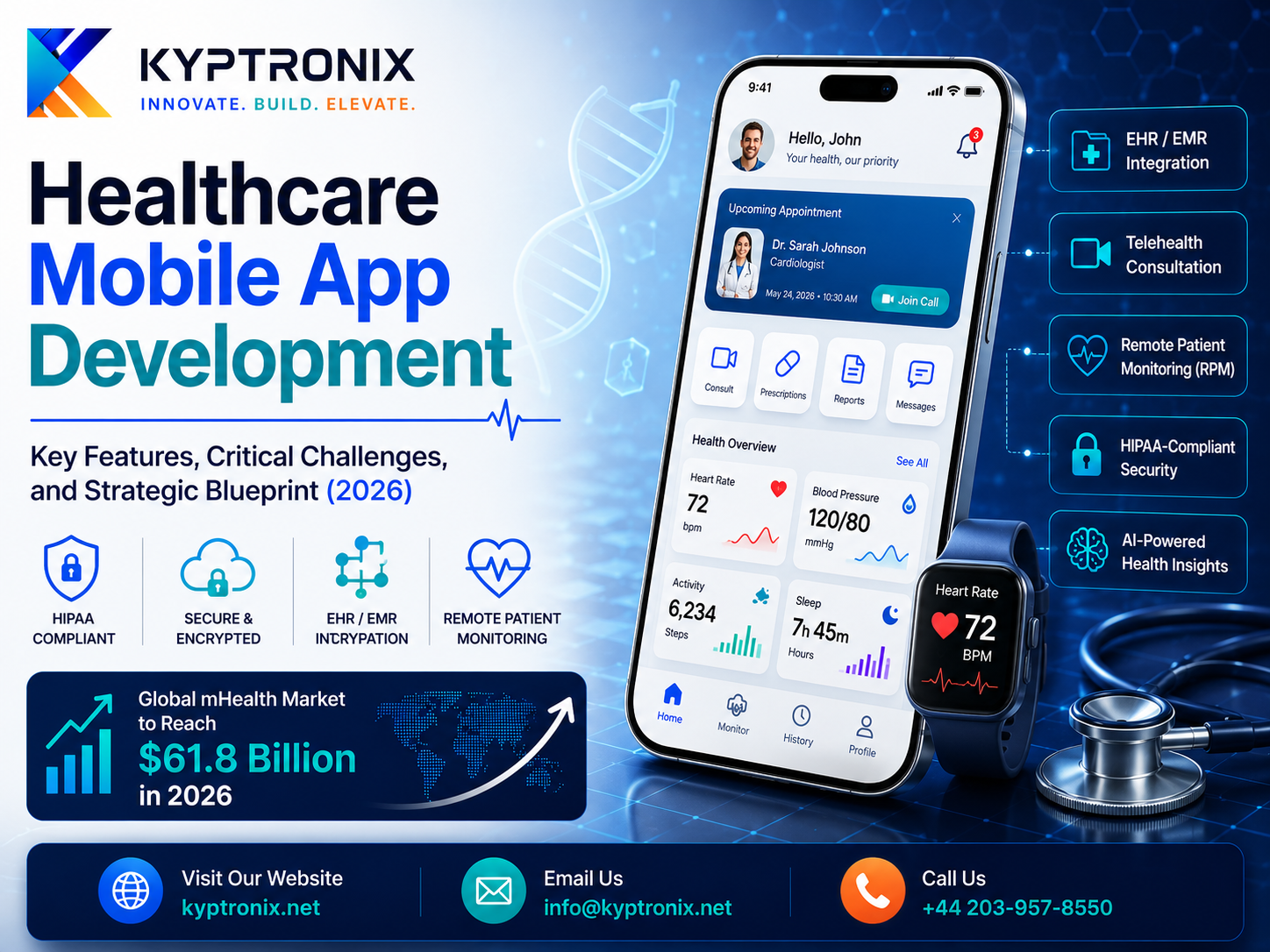
The healthcare industry has officially moved beyond simple digital migration. Now, it is fully operating in a mobile-first care delivery ecosystem. According to recent market intelligence from Persistence Market Research, the global mobile health (mHealth) market is projected to reach $61.8 billion in 2026 and surge past $150 billion by 2033. Driven by an aging global population, an escalating burden of chronic noncommunicable diseases, and rapid smartphone adoption, digital health tools have shifted from a luxury convenience to a core clinical requirement.
However, building software for the medical sector is fundamentally different from engineering a consumer retail or social media application. A bug in a shopping cart app results in a lost sale; a bug in a telehealth prescription engine or an ICU alert system can lead to severe clinical complications or multi-million-dollar regulatory penalties.
Whether you are a health system executive, a digital therapeutics founder, or a clinical operations leader, navigating Healthcare Mobile App Development requires a delicate balance between user experience, strict regulatory compliance, and complex data interoperability.
This comprehensive guide unpacks the 2026 digital health landscape, comparing app architectures, highlighting must-have features, addressing critical engineering challenges, and detailing a step-by-step roadmap for launching a successful medical application.
The 2026 Digital Health Landscape: Categories & Use Cases
Before writing a single line of code, healthcare organizations must define the precise clinical and operational goals of their digital product. In modern mHealth app development, applications generally fall into three distinct functional categories:
Healthcare App Taxonomy
Patient-Centric Apps
Telehealth, RPM, Patient Portals & Wellness
Provider-Centric Apps
EHR/EMR Mobile Extensions, E-Prescribe, Triage
Operational / Enterprise
Automated Billing, Asset Tracking & Staffing
- Patient-Facing Applications: Designed to drive user engagement, facilitate virtual consultations, and empower personal health management. Examples include telehealth app development platforms, chronic disease management suites, and digital prescription tools.
- Provider-Centric Software: Built for clinicians, nurses, and administrative staff to streamline clinical workflows, review diagnostic reports, coordinate care teams, and update medical records on the go.
- Enterprise & Operational Ecosystems: Specialized platforms designed for hospital supply chain management, medical asset tracking, staff scheduling, and automated billing processing.
Comparative Analysis: Patient-Facing vs. Provider-Facing Mobile Architectures
To help your technology leadership team allocate resources effectively, the comparative analysis below breaks down the technical and operational differences between patient-centric software and provider-focused tools:
| Architectural Dimension | Patient-Facing Healthcare Applications | Provider-Centric Clinical Software |
|---|---|---|
| Primary Design Objective | Maximize user retention, accessibility, and visual clarity | Streamline clinical documentation and minimize screen time |
| User Onboarding Experience | Frictionless, consumer-friendly identity verification | High-security Single Sign-On (SSO) with multi-role access controls |
| Core Technical Integration | Consumer wearables (Apple HealthKit, Google Health Connect) | Legacy EHR/EMR integration via FHIR standards |
| Data Processing Profile | Asynchronous data sync (symptom logs, medication tracking) | Real-time, low-latency streaming (vitals, telemetry alerts) |
| Security Emphasis | Patient consent management and encrypted local storage | Granular Role-Based Access Control (RBAC) & audit logging |
Strategic Takeaway
While patient-facing apps prioritize intuitive patient engagement app interfaces to drive daily adoption, provider tools must prioritize speed, data accuracy, and frictionless integration with existing hospital electronic records to prevent clinical burnout.
Must-Have Features in Modern Healthcare Applications
The feature set of a medical app dictates both its clinical utility and its user adoption rates. The six core features below represent the standard baseline for commercial mHealth app development:
1. High-Definition Telemedicine & Virtual Consultations
With virtual visits now embedded into standard care delivery, telehealth app development requires far more than basic video calling. Modern platforms feature integrated encrypted video conferencing (WebRTC), multi-party calls for family members or specialists, interactive digital whiteboards, and real-time in-call clinical documentation.
2. Real-Time Remote Patient Monitoring (RPM) & Wearable Sync
Driven by the global surge in chronic conditions, such as hypertension and diabetes, Remote Patient Monitoring (RPM) is one of the fastest-growing segments in digital health. Apps must seamlessly pair via Bluetooth or cellular IoT with medical-grade devices, such as continuous glucose monitors (CGMs), pulse oximeters, and smart blood pressure cuffs, transmitting continuous telemetry back to care teams.
3. Native EHR/EMR Integration via FHIR Standards
A healthcare app operating in an isolated data silo adds operational friction for clinicians. Leading applications use HL7 and Fast Healthcare Interoperability Resources (FHIR standards) to read and write data directly to major electronic health record platforms like Epic, Cerner (Oracle Health), and Allscripts in real time.
4. Automated E-Prescriptions & Medication Adherence Alerts
To improve medication compliance, apps should integrate with national e-prescribing networks, such as Surescripts. Patients receive automated reminders, dosage instructions, and one-tap pharmacy prescription refills, while doctors can verify potential drug-to-drug interactions instantly.
5. AI-Powered Predictive Triage & Symptom Checking
Incorporating conversational AI models and clinical decision support algorithms enables apps to triage patient symptoms before a doctor's visit. Natural language processing (NLP) models can evaluate patient complaints, categorize urgency levels, and automatically direct patients to emergency services, urgent care, or a virtual consultation.
6. Frictionless Onboarding & Multi-Factor Biometric Security
To balance convenience with safety, applications must support passwordless authentication, such as Face ID, touch biometrics, or one-time passcodes (OTP), paired with mandatory Multi-Factor Authentication (MFA) to guard against unauthorized access.
Navigating the Biggest Engineering Challenges in Healthcare Software
Building medical software requires clearing steep regulatory, technical, and architectural hurdles. Failing to address these challenges early in the development lifecycle can lead to catastrophic data breaches, rejected app store submissions, or massive regulatory fines.
Challenge 1: Regulatory Compliance & HIPAA Enforcement
In the United States, any mobile application that collects, stores, processes, or transmits Electronic Protected Health Information (ePHI) must comply with the Health Insurance Portability and Accountability Act (HIPAA). Globally, developers must navigate parallel frameworks like GDPR in Europe, PIPEDA in Canada, and local health data governance laws.
HIPAA Technical Safeguards for Apps
ENCRYPTION
- • AES-256 At-Rest
- • TLS 1.3 Transit
ACCESS CONTROL
- • Biometric MFA
- • RBAC Matrix
AUDIT TRAILS
- • Immutable Logs
- • Real-time SIEM
Key Technical Safeguards for HIPAA-Compliant Apps:
- End-to-End Encryption: All ePHI must be encrypted using AES-256 standards at rest and TLS 1.3 in transit. Storing unencrypted patient data in basic local device storage like SharedPreferences or LocalStorage is a major compliance vulnerability.
- Business Associate Agreements (BAAs): Every third-party cloud infrastructure provider, database host, push notification service, or video API integrated into the app must sign a legally binding BAA.
- Immutable Audit Logs: Systems must track, log, and time-stamp every single instance of data creation, viewing, modification, or deletion to maintain complete operational audit trails.
Challenge 2: Data Interoperability & Legacy System Integration
Healthcare data is notoriously fragmented across legacy hospital databases, proprietary billing platforms, and varied clinical software. Achieving smooth EHR/EMR integration requires deep expertise in modern API standards, such as FHIR, as well as legacy HL7 v2/v3 protocols. Developers must normalize unstructured health records into standardized JSON formats without compromising data integrity.
Challenge 3: Advanced Cyber Threats & Healthcare App Security
The healthcare industry remains a primary target for cybercriminals. According to reports from The HIPAA Journal and HHS, over 275 million healthcare records were compromised in data breaches in recent years.
Establishing robust healthcare app security requires deploying zero-trust network architectures, executing quarterly penetration testing, masking sensitive API outputs to avoid data over-fetching, and building automated session time-outs to prevent unauthorized access on lost or stolen mobile devices.
Step-by-Step Blueprint for Healthcare App Development Success
To minimize technical debt and protect your investment capital, your development team should execute a disciplined, phase-by-phase build lifecycle:
Clinical Scoping & Regulatory Risk Assessment
Define the target user personas, clinical workflows, and data touchpoints. Conduct a formal HIPAA risk assessment to classify which data elements constitute ePHI and determine necessary regulatory frameworks.
Architecture Design & Compliant Cloud Provisioning
Design a zero-trust, microservices-based system architecture. Provision dedicated HIPAA-compliant cloud hosting environments, such as AWS HealthLake or Azure for Healthcare, and execute BAAs with infrastructure vendors.
Agile Engineering & FHIR API Integration
Build the application in 2-week agile sprints. Develop patient-facing UI components, write secure backend services, and implement FHIR standards for seamless EHR/EMR integration.
Rigorous QA & Security Penetration Testing
Execute comprehensive functional testing across dozens of screen sizes and device configurations. Conduct third-party vulnerability scans, static code security analyses, and penetration testing to identify and patch security gaps before release.
App Store Deployment & Continuous Monitoring
Navigate Apple App Store and Google Play Store medical software submission requirements. Continuously implement real-time Security Information and Event Management (SIEM) tools to monitor for unauthorized access attempts.
Conclusion: Partnering with Kyptronix for Digital Health Excellence
The digital health landscape offers immense commercial opportunities for forward-thinking healthcare organizations, medical startups, and clinical practices. However, navigating the intersection of mobile software engineering, user experience design, and complex medical compliance requires a specialized development partner who understands the high stakes of digital health.
Successfully launching a modern application demands expertise across HIPAA-compliant app development, low-latency telehealth app development, secure Remote Patient Monitoring (RPM) systems, and seamless EHR/EMR integration.
At Kyptronix, we bridge the gap between complex clinical workflows and modern mobile software engineering. We don't just build software. We partner with healthcare organizations to architect secure, scalable, and intuitive digital health platforms designed to improve patient outcomes and streamline care delivery. Whether you are building a new digital therapeutics app from scratch or modernizing a legacy hospital portal, our team provides the technical skill and regulatory guidance needed to succeed.
Ready to transform your healthcare app concept into an enterprise-grade digital health solution? Connect with the healthcare software team at Kyptronix.net today to schedule your technical consultation.
Frequently Asked Questions (FAQs)
Medical apps handle highly sensitive Electronic Protected Health Information (ePHI). Unlike standard apps, medical software must comply with strict legal privacy regulations, such as HIPAA in the US or GDPR in Europe, implement enterprise-grade data encryption, connect to complex clinical databases via FHIR standards, and pass stringent security audits.
The cost of HIPAA-compliant app development varies based on complexity. A basic Minimum Viable Product (MVP) telehealth or appointment booking app typically ranges between $50,000 and $100,000. A complex, enterprise-grade platform featuring real-time Remote Patient Monitoring (RPM) and full EHR/EMR integration can range from $150,000 to $300,000+.
If your application is a standalone consumer tool for general wellness, workout tracking, or diet planning and does not collect, store, or transmit patient data on behalf of a covered healthcare entity, such as a hospital, clinic, or health insurer, it generally does not fall under HIPAA jurisdiction. However, if it syncs patient data directly with a doctor's portal, HIPAA compliance becomes mandatory.
Fast Healthcare Interoperability Resources (FHIR standards) are modern API protocols created by HL7 that standardize how digital health software exchanges medical records across different systems. They allow your app to communicate smoothly with legacy systems, such as Epic, Cerner, or Athenahealth, without requiring custom, fragile integration adapters for every provider.
A standard commercial mHealth app typically takes between 4 and 9 months to design, build, test, and deploy. The timeline depends heavily on the total number of features, the complexity of third-party medical device integrations, and the required depth of regulatory testing.
A BAA is a legally binding contract required under HIPAA between a covered entity and any third-party service provider, such as cloud hosting vendors, database providers, or SMS gateways that handle ePHI. It legally binds the vendor to maintain strict security safeguards to protect patient privacy.
Robust healthcare app security relies on multi-layer defenses: encrypting all data with AES-256 at rest and TLS 1.3 in transit, enforcing multi-factor biometric authentication, configuring Role-Based Access Controls (RBAC), masking sensitive screen fields, maintaining immutable access audit logs, and conducting regular third-party penetration tests.
A successful RPM app requires seamless Bluetooth/cellular sync with medical wearables, real-time visualization of vital-sign data, automated threshold alerts for care teams, offline data caching in poor-connectivity zones, and secure asynchronous messaging between patients and providers.
Many patient engagement apps fail due to overly complex onboarding, confusing navigation layouts, lack of real value, or frequent technical glitches. To maximize retention, apps must prioritize intuitive UI/UX design, offer rapid biometric login, deliver personalized contextual notifications, and provide clear clinical utility.
Yes. Modern cross-platform frameworks like Flutter and React Native can be used to build secure, high-performance healthcare applications. They allow engineering teams to maintain a single unified codebase for both iOS and Android, cutting development timelines while maintaining native-grade performance and full encryption compatibility.